
TOOTH EXTRACTIONS FOR ADULTS, UPPER WESTSIDE MANHATTAN
You and Dr. Dewundara, Dr. Doan, Dr. Kim, Dr. Tan, Dr. Goldman, Dr. Hewson or Dr. Vimawala may determine that you need a tooth extraction for any number of reasons.
Some teeth are extracted because they are severely decayed; others may have advanced periodontal disease, or have broken in a way that cannot be repaired. Other teeth may need removal because they are poorly positioned in the mouth (such as impacted teeth), or in preparation for orthodontic treatment.
The removal of a single tooth can lead to problems related to your chewing ability, problems with your jaw joint, and shifting teeth, which can have a major impact on your dental health.
To avoid these complications, the doctors will discuss alternatives to extractions as well as replacement of the extracted tooth.
The Extraction Process
At the time of extraction the doctor will need to numb your tooth, jaw bone and gums that surround the area with a local anesthetic.
It is normal to feel the pressure without pain as the anesthetic has numbed the tooth nerves.
After Tooth Extraction
After tooth extraction, it’s important for a blood clot to form to stop the bleeding and begin the healing process. Bite on a gauze pad for 15-30 minutes immediately after the appointment. If the bleeding or oozing still persists, place another gauze pad and bite firmly for another 15 minutes. You may have to do this several times to slow down the flow of blood.
After the blood clot forms it is important to avoid disturbing the clot. Do not rinse vigorously, intensely suck on straws, smoke, drink alcohol or brush teeth at the extraction site for 72 hours. These activities may dislodge or dissolve the clot and hinder the healing process. Limit vigorous exercise for the next 24 hours, as this increases blood pressure and may cause more bleeding from the extraction site.
After the tooth is extracted you may feel some pain and experience some swelling. An ice pack or an unopened bag of frozen peas or corn applied to the area will keep swelling to a minimum. Take pain medications as prescribed. The swelling usually subsides after 48 hours.
Use pain medication as directed. Drink lots of fluids and eat nutritious, soft food on the day of the extraction. You can eat normally as soon as you are comfortable.
It is important to resume your normal dental routine after 24 hours. This should include brushing and flossing your teeth at least once a day. This will speed healing and help keep your mouth fresh and clean.
After a few days you should feel back to normal and can resume your regular activities. If you have heavy bleeding, severe pain, continued swelling for 2-3 days, or a reaction to the medication, call our office immediately.
Wisdom Teeth Procedure,
Upper Westside Manhattan
What are wisdom teeth?
Why should I have my wisdom teeth removed?
If you do not have enough room in your mouth for your third molars to fully erupt, a number of problems can happen. Impacted wisdom teeth should be removed before their root structure is fully developed. In some patients it is as early as 16 or 17, and in others it may not be until the early twenties. Problems tend to occur with increasing frequency after the age of 25. Some of the possible problems related to not removing your wisdom teeth include:
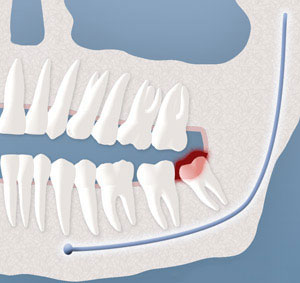
Infection:
The most frequent clinical problem we see is pericoronitis, (a localized gum infection). Without enough room for total eruption, the gum tissue around the wisdom tooth can become irritated and infected, resulting in recurrent pain, swelling, and problems with chewing and/or swallowing.
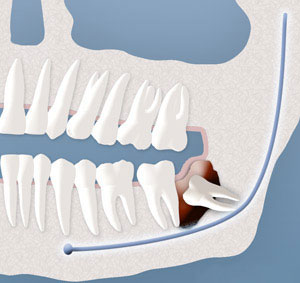
Cyst Formation:
Non-infectious diseases may also arise in association with an impacted wisdom tooth. Cysts are fluid-filled “balloons” inside the jaw bone that develop as a result of impacted teeth and slowly expand destroying adjacent jaw bone and occasionally teeth. They can be very difficult to treat if your wisdom teeth are not removed in your teenage years. Although rare, tumors can be associated with the delayed removal of wisdom teeth.
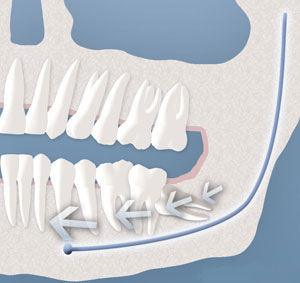
Possible Crowding:
Impacted wisdom teeth may contribute to crowding of your teeth. This is most noticeable with the front teeth, primarily the lower front teeth and is most commonly seen after a patient has had braces. There are a number of factors that cause teeth to crowd after braces or in early adulthood. Retained, impacted wisdom teeth may be a contributing factor. Unless you have an active problem when you see the oral surgeon, the reason for removal is primarily to prevent long-term damage to your teeth, gums and jaw bone.
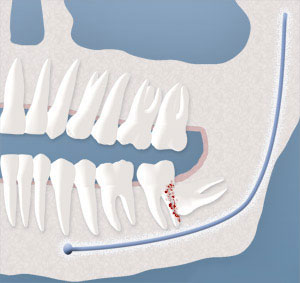
Damage to Adjacent Teeth:
If there is inadequate room to clean around the wisdom tooth, the tooth directly in front, the second molar, can be adversely affected resulting in gum disease, bone loss around the tooth, and/or decay.
What if I don’t have my wisdom teeth removed as a teenager or young adult?
As wisdom teeth develop, the roots become longer and the jaw bone more dense. When it is necessary to remove impacted wisdom teeth in your thirties, forties or beyond, the post-operative course can be prolonged and there is a higher complication rate. Treating these complications is often more difficult and less predictable than with a younger patient. Healing may be slower and the chance of infection can be increased. If your impacted wisdom teeth are not removed in your teenage years or early in your twenties and they are completely impacted in bone, it may be advisable to wait until a localized problem (such as cyst formation or localized gum disease and bone loss) develops. In general, you will heal faster, more predictably and have fewer complications if treated in your teens or early twenties.
What options are there to make the wisdom tooth removal more comfortable?
Every patient will receive adequate local anesthesia (numbing with a needle for the tooth and gums). For deeper relaxation, we also offer Nitrous Oxide (“laughing gas”) and IV sedation (“twilight sleep”). Please visit these pages for more information. Call us to schedule a consult with our oral surgeon for more information about what is right for you, at 212 496 9600. We look forward to helping you!

The Day of Treatment
For those using nitrous oxide (“laughing gas”), please do not eat or drink anything 1 hour prior to your surgery. For IV sedation, do not eat or drink 8 hours before surgery. Having anything in your stomach can increase the risk for serious anesthetic complications. *Inquire with us for more specific guidance for your situation.
Call Westside Family Dental Group Phone Number 212-496-9600 to schedule your wisdom teeth consultation.
To read more about wisdom teeth view our informative pages below.
Ready to Make an Appointment with the Best Family Dentist in the Upper Westside?
Call Westside Family Dental Group with any questions or to make an appointment!