
Invisalign vs. Braces: Which Is Right for You or Your Child?
 Invisalign trays vs. Braces
If you or your child need orthodontic treatment, you have likely run into the same question many families ask: Invisalign vs. braces, which one actually makes sense for your situation? Both options can straighten teeth and improve your bite, but they work differently and fit different lifestyles.
There is no single answer that works for everyone. The right choice between clear aligners vs braces often comes down to your age, your daily habits, and how complex your alignment needs are. When people search braces vs. Invisalign, they are usually weighing the same handful of factors: how noticeable the treatment is, how it fits into everyday life, and how well it can handle their specific alignment concerns.
This guide walks through how each option works, where they differ across the factors that matter most, and how to start narrowing down the right fit for you or your child. Whether you are exploring options for yourself or trying to decide what makes sense for a teenager, understanding the basics of each treatment is a helpful place to start.
What Is Invisalign?
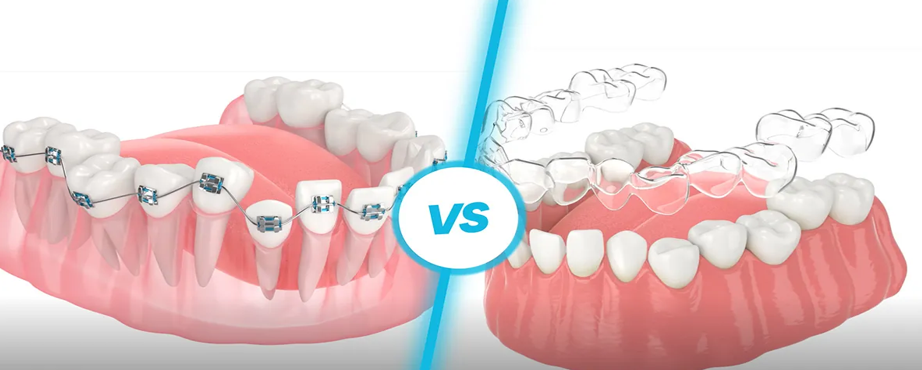
Invisalign is a clear aligner system that uses a series of custom-made, removable trays to gradually shift teeth into place. Each set of aligners is worn for a set period before moving on to the next tray in the series, with small adjustments building toward the final result over time.
Because the trays are clear and can be taken out, Invisalign tends to appeal to patients who want a more discreet option and the flexibility to remove their aligners for eating, brushing, and special occasions. It is often a good fit for older teens and adults with mild to moderate alignment concerns who are ready to keep up with consistent wear.
Since each tray in the series is custom-made for your teeth at that stage of treatment, the process relies on wearing your current set for the recommended amount of time each day before moving to the next one. Patients who stay consistent with wear time tend to see their treatment progress on schedule, which is part of why Invisalign works especially well for motivated teens and adults.
What Are Traditional Braces?
Traditional braces use brackets, usually metal or ceramic, that are bonded to the teeth and connected by a wire. The wire is adjusted over time to apply steady pressure, gradually guiding teeth into their correct position.
Unlike aligners, braces are a fixed appliance that stays in place throughout treatment rather than something you remove yourself. This makes braces a dependable option for a wide range of cases, including more complex bite and spacing issues, and it removes the responsibility of remembering to wear a removable device consistently.
Because braces do not depend on daily compliance the way removable aligners do, they can be a steadier choice for younger patients or anyone who might struggle to keep up with a removable device. Ceramic brackets offer a tooth-colored alternative to traditional metal for patients who want a fixed option that is a little less noticeable.
Invisalign vs. Braces: Key Differences
Once you understand how each option works, it helps to compare them side by side across the factors that matter most day to day.
Appearance
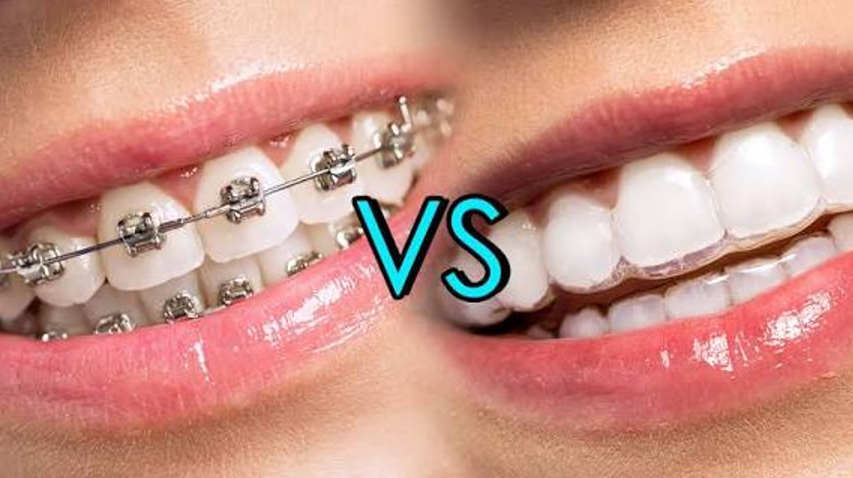
Invisalign aligners are clear and nearly invisible when worn, which is a major draw for patients who prefer a subtle look. Braces are more noticeable, though ceramic brackets offer a less conspicuous alternative to traditional metal braces for patients who want a middle ground.
Comfort
Invisalign trays are made of smooth plastic with no metal parts to irritate the cheeks or gums. Braces can occasionally cause some irritation from brackets and wires, especially right after an adjustment, though this typically eases within a few days.
Effectiveness
Braces tend to be the stronger choice for more complex orthodontic cases, including significant crowding, spacing, or bite issues. Invisalign works well for mild to moderate alignment concerns, where the more limited range of movement is not a barrier to reaching the desired result.
Convenience & Lifestyle
Invisalign can be removed for eating, brushing, and flossing, which appeals to patients who do not want dietary restrictions during treatment. Braces stay on throughout treatment, which means avoiding certain hard or sticky foods, but it also removes any guesswork about whether the appliance is being worn enough.
Oral Hygiene
Because Invisalign trays come out, brushing and flossing stay close to your normal routine throughout treatment. Braces require a bit more care, since food and plaque can collect around brackets and wires, so patients typically need some extra tools and attention to keep their teeth and gums healthy.
Treatment Time
Treatment time varies by case for both options, so it is hard to generalize. Invisalign can move more quickly for milder cases, while braces are often used for longer or more involved corrections that need steady, continuous adjustment.
Cost Comparison
Cost for both Invisalign and braces depends on the complexity of your case and the length of treatment, so it is best discussed during a consultation rather than estimated in advance. Many dental insurance plans offer some orthodontic coverage, so it is worth checking your benefits before deciding between options.
Invisalign for Kids & Teens vs. Braces
Invisalign for kids and teens is available in versions designed with younger patients in mind, including features like compliance indicators and replacement trays for a growing smile. That said, braces are often recommended for younger patients or more complex cases, since they do not rely on a child remembering to wear and care for a removable appliance.
Choosing Invisalign for a child or teen usually depends on their responsibility level as much as their dental needs, since consistent wear is what makes the treatment work. Our team can help you weigh whether your child is ready for that responsibility or whether braces for adults or kids might be the steadier option.
How to Choose the Right Option
The right choice ultimately depends on a few key factors working together. The severity of the alignment issue matters, since more complex cases often respond better to braces, while milder cases have more flexibility to consider Invisalign.
Age and responsibility level play a role too, especially for children and teens who will need to manage a removable aligner consistently. A patient who is comfortable keeping track of aligners, wearing them for the recommended hours each day, and switching trays on schedule is often a strong candidate for Invisalign, while a patient who needs a more hands-off approach may do better with braces.
Lifestyle preferences, such as how much visibility or dietary flexibility matters to you, along with budget and insurance coverage, all factor into the decision as well. Some patients also weigh how treatment fits around sports, instruments, or other activities where a removable or fixed appliance might make a difference. Because every smile is different, the most reliable way to choose between Invisalign and braces is a consultation with a dentist or orthodontist who can evaluate your specific needs and goals.
Schedule an Orthodontic Consultation with Westside Family Dental Group
Choosing between Invisalign and braces does not have to be a decision you make on your own. Our orthodontist, Dr. Jae Kim, DDS, MS, works with patients and families to build a personalized treatment plan based on your goals, your lifestyle, and the complexity of your case.
To schedule an orthodontic consultation with Westside Family Dental Group, contact our office at Westside Family Dental Group Phone Number 212-496-9600. Our team is also happy to take your call on weekends, so support is available even outside of typical office hours whenever you need us.